
Tava (oven-baked lamb and potatoes)
- Feb 8
- 4 min read
Updated: May 10
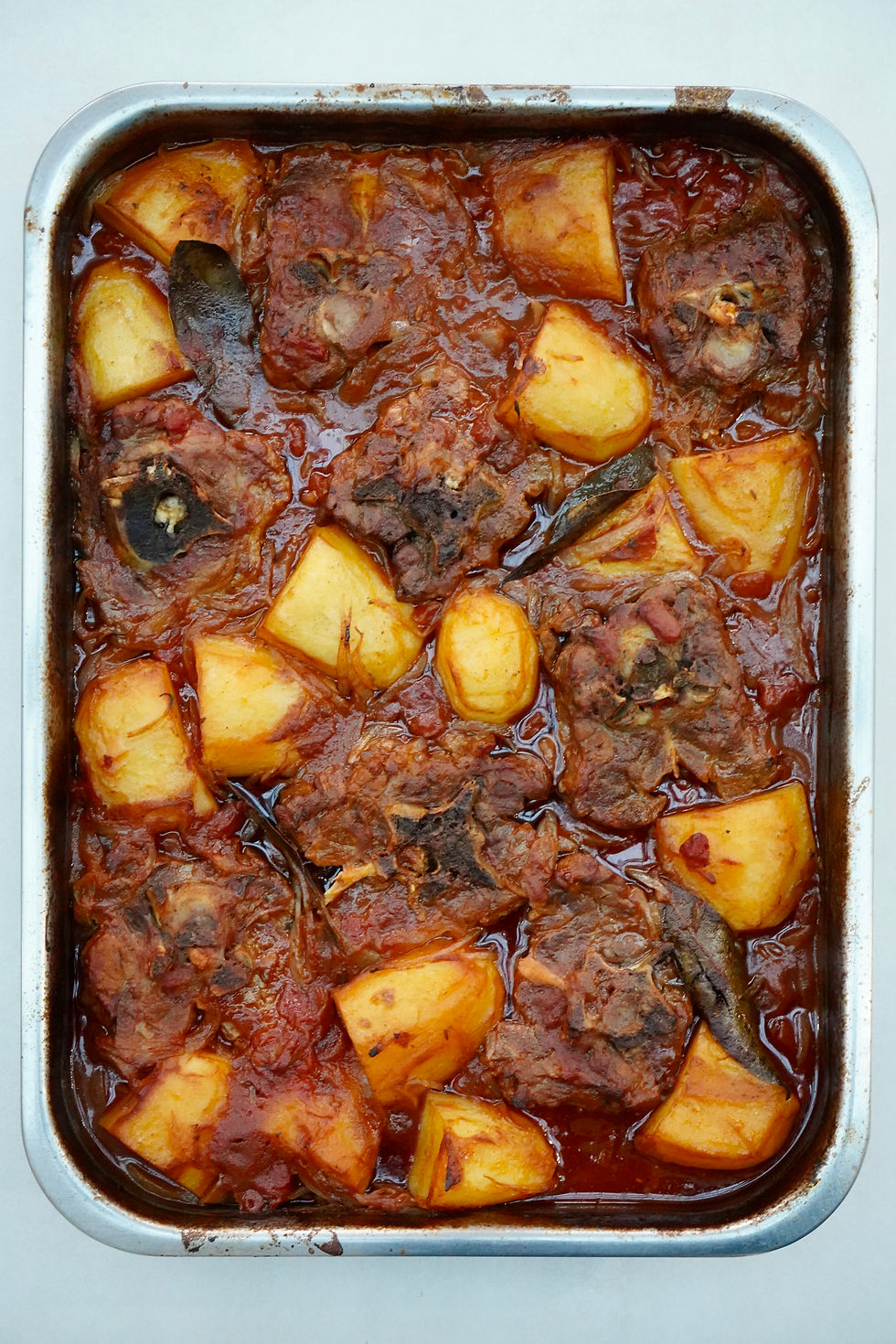
Tava is a traditional oven-baked lamb dish that's popular in Cyprus, Greece and Turkey. In Turkish, tava means 'pan', which reflects how it is prepared. Chunky cuts of lamb neck are slow-cooked in a richly flavoured tomato sauce until soft and tender. It's hearty and comforting, making it perfect for a cosy weekend shared with family and friends.
The sauce is deeply fragrant from the use of oregano, cumin, cinnamon and bay leaves. A generous amount of sliced onions also adds gentle sweetness, balancing the earthy spices, while ground black pepper provides subtle warmth.
Tava is best served simply with some bread, natural yoghurt and a rice of your choice, such as şehriyeli pilav. Salad and çakıstes are also great on the side for fresh, sharp flavours that reset the palate as you eat.

Cooking tips
Each potato piece need to be slit twice as this helps them absorb the tomato sauce and spices more deeply while cooking. As we use waxy Cyprus potatoes in our recipe, they will still hold their shape well.
Lightly frying the onions softens their sharpness, brings out their natural sweetness and helps them melt into the sauce while baking.
The sauce should reduce to become rich and thick by the end of cooking. If there is too much liquid remaining after removing the foil, continue baking uncovered for a little longer.
Turning everything over halfway through cooking helps the potatoes absorb the sauce evenly and prevents the exposed surfaces from drying out.
Ingredient notes:
Cyprus potatoes are traditionally used in tava as they stay firm and hold their shape after baking for over 2 hours. The tops are crisped at the final stage of cooking and they absorb all the rich flavours of the sauce. If you don't have access to Cyprus potatoes, you can use another waxy variety. An all-rounder like Maris Piper can also work, but it may soften and crumble in the sauce.
A medium-sized chicken cut into pieces can be used instead of lamb neck, and crisping the skin adds extra flavour and texture. However, you will need to adjust cooking times to ensure the chicken stays juicy and doesn't become dry. For an alternative oven-baked lamb dish, try kleftiko (hırsız kebabı).
Rubbing the cumin seeds between your hands before adding helps release its oils and gives the dish a warmer, more aromatic flavour. We suggest adding 1 teaspooon of cumin seeds in our recipe, but you can reduce to ½ teaspoon if you prefer a lighter aroma.

Serves 4 to 6 | Preparation time: 15 minutes | Cooking time: 2 hours 30 minutes
For best results, see our cooking tips above.
Ingredients
8 2cm-thick bone-in lamb neck pieces (approx 1.2-1.5kg), washed and drained | 8 medium (1kg) Cyprus potatoes (or other waxy potato variety), peeled and washed |
4 medium onions | 400g tinned chopped tomatoes |
2 tbsp tomato paste | 5-6 whole bay leaves, washed and drained |
1 tsp dried oregano | 1 tsp whole cumin, rubbed firmly between your hands to release the flavour |
¼ tsp ground cinnamon | 1 tsp ground black pepper |
1 tsp salt, or as desired | 500ml hot water |
Sunflower oil |
Hob heat settings

Method
Watch our video to see how we prepare tava, or follow the steps below:
Preheat the oven to 200°C/180°C Fan/Gas Mark 6.
Finely slice the onions into half-moons.

Add a little oil to a large saucepan and fry the onions on a medium-high heat, until slightly softened - about 5-10 minutes. Remove from the heat and place to one side.
Cut the potatoes into 5-6cm pieces. Slit each potato piece 1cm deep twice on the round side.

Lay out the potatoes and meat in a D5xW30xL40cm oven dish.

Next, sprinkle over the cooked onions.

In a bowl, mix together the chopped tomatoes, tomato paste, hot water, salt and spices. Pour this mixture carefully all over the potatoes, meat and onions and gently part the contents with a spoon to ensure everything mixes well. Add the bay leaves, tucking them in between the meat.

Cover the tray with foil and bake in the oven for 1 hour.
Remove from the oven, turn the meat and potatoes over, then sprinkle a few of the onions and bay leaves that have fallen off back over the top. Re-cover with foil and return to the oven to bake for a further 1 hour.
Remove the foil. You can top up with a little more hot water if you feel it has run low, but the aim is to get a thick sauce when cooked so be mindful of this. Place back in the oven for a further 20-30 minutes, or until the meat has browned and the potatoes are fully cooked (test with a fork - they should hold their shape well but be fully cooked through).

Serve simply with bread or a rice dish on the side.
Serving and storage
Serving
Şehriyeli pilav works particularly well alongside tava because the light rice balances the richness of the lamb, while fresh bread is a pleasure to dip into the sauce.
A spoonful of natural or strained yoghurt adds freshness to help balance the warming spices like cumin, while çakıstes and a salad dressed with lemon juice and olive oil provide contrast to the deep flavours of the dish.
Storage and reheating
Tava can be cooled to room temperature before storing in the fridge for up to 2 days. The flavours will continue to develop and the potatoes will absorb them further. To reheat, cover with foil and bake at 180°C/160°C Fan/Gas Mark 4 until piping hot. You may need to add a little hot water before baking if the sauce has thickened too much in the fridge.
Tava can also be frozen for up to 2 months. You will need to defrost fully before following the reheating instructions above. The potatoes may soften slightly after freezing, but the dish will still taste great. For best results and food safety, use fresh rather than previously frozen lamb if you plan to freeze tava after cooking.

