
Ayva macunu (candied quince)
- Dec 18, 2025
- 3 min read
Updated: Apr 4
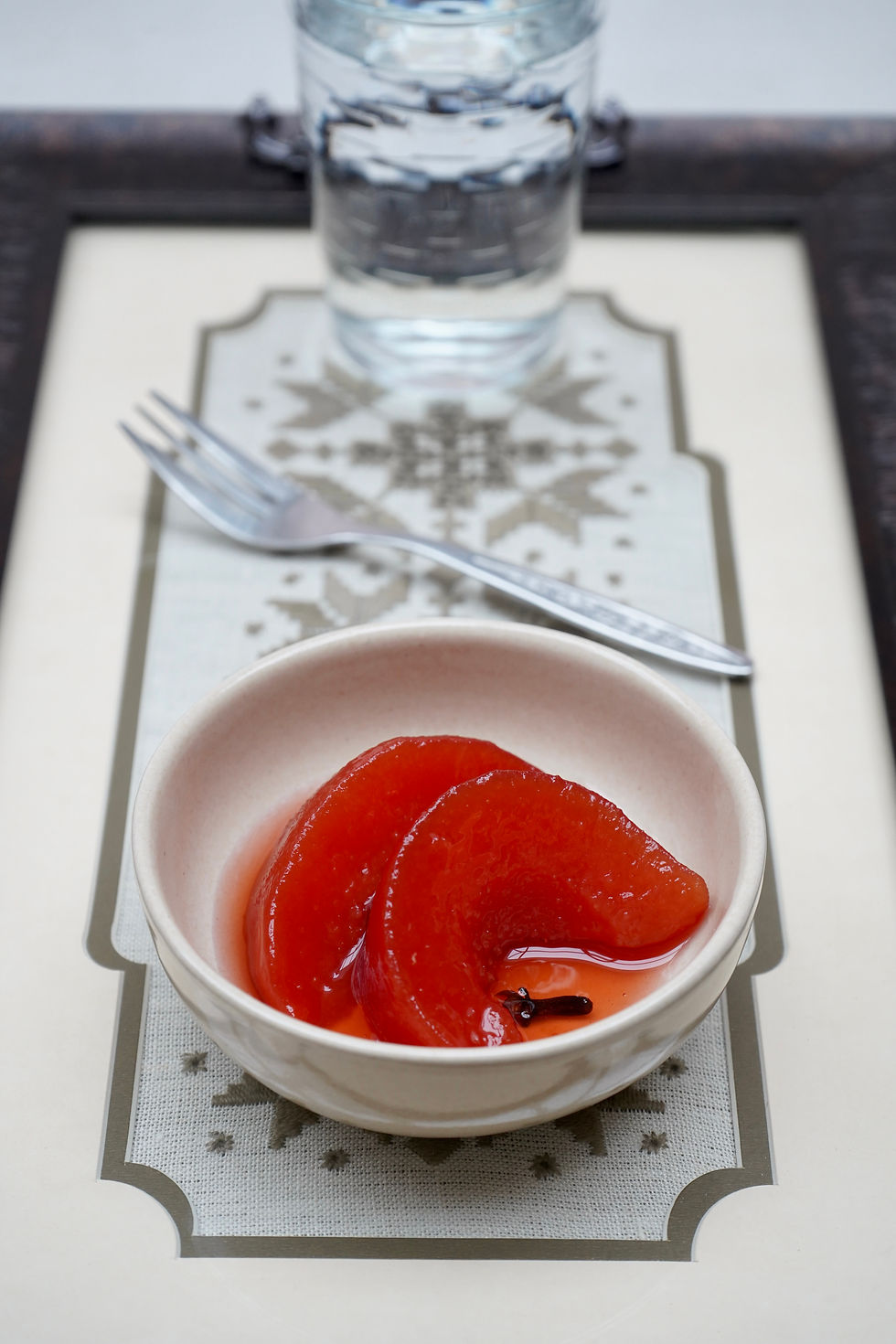
Ayva macunu, or candied quince, is a much-loved traditional Cypriot preserve that's made when golden-skinned quinces are at their best, from late autumn through to early winter. With its deep rosy colour, glossy syrup and firm yet tender slices of fruit, ayva macunu is as beautiful as it is comforting.
It has a delicate, floral flavour and fragrance, with a soft sweetness that isn't overpowering or sugary. The addition of cloves to the syrup adds a subtle background note that is cosy, but not too spicy. Together with a hint of lemon, it is a joy to make as your kitchen fills with the wonderful aromas.

Ayva macunu is traditionally served to guests as a sign of hospitality. It is presented in a small dessert plate or bowl with a dessert fork, alongside a glass of cold water or Turkish coffee. The glass of water allows guests to dip the candied quince, softening the sweetness if desired.
Candied quince is also delicious spooned over thick yoghurt, served with a dollop of kaymak (clotted cream) on top, or enjoyed alongside vanilla ice cream for dessert. It is a truly versatile sweet that can be enjoyed in many ways.
Pouring the hot preseve into clean jars and sealing them immediately helps create an airtight seal as it cools, allowing the candied quince to be stored for longer. You can also prepare quince as a jam - take a look at our ayva reçeli recipe if you would like to try making it.

Makes approx 24 pieces | Preparation time: 15 minutes | Cooking time: 1 hour and 40 minutes | Additional time: 1 hour to leave the fruit in sugar
Ingredients
4 (1kg) medium quinces, peeled and cored (it will be approx 750g when prepared) | 750g white sugar |
450ml water | 50ml fresh lemon juice |
5 cloves |
Hob heat settings

Method
Put a small plate in the freezer - this will be used later to test the syrup.
To prepare the quince, cut each fruit in half (after peeling and coring). Slice each half into 3 crescent-shaped pieces, that are about 3–4 cm thick at the wider end - similar to orange segments.

Place the cut fruit in a large saucepan and cover with the sugar. Gently stir by lifting the fruit over from the bottom with a spoon to ensure even distribution of sugar and being careful not to break the pieces. Cover and leave to stand for 1 hour.

Add the water to the sugar-coated quince and place on a medium-high heat. Boil while loosely covered for 20-25 minutes or until it starts to bubble constantly. Gently stir occasionally by parting the fruit pieces and mixing in between - you need to be careful not to break the pieces.
Lower to a medium heat and add the lemon juice. Boil while loosely covered for 1 hour to 1 hour and 15 minutes more, or until the quince pieces and syrup have turned a deep peach-pink colour and the water has reduced. Gently stir again occasionally using the same method as before.
To test if the preserve is ready, add half a teaspoon (3-4 drops) of the syrup to the cold plate from the freezer and leave for 1 minute to cool. It should thicken so that when you lift the plate up vertically it has the consistency of runny honey. If it is watery, simmer for 5-10 minutes more or until firmer when re-tested.
Add to a large sterile jar, seal and allow to cool completely before storing in the fridge.
Serve a piece of preserved quince with a glass of water on the side.


